Please click on the link below to view the Autumn 2018 issue of our Harlequin newsletter (with photos in full color!)


Please click on the link below to view the Autumn 2018 issue of our Harlequin newsletter (with photos in full color!)

After a career running children’s summer camps, then living aboard a sailboat, and working for Vermont State Parks, Sue Keefer and Steve Norris have spent seven summers helping out at Rachel Carson National Wildlife Refuge where you may have encountered them trying to keep invasive plants at bay, mowing, painting, or leading bird, butterfly, tide-pool, history, and photography programs. In the winter of 2017-18, Sue and Steve acted on a long-standing bucket list item. Their love of Ecuador compelled them to visit to the Galapagos Islands – the “Showcase of Evolution”.
Their original plan for a “non-bird-centric” trip soon fell apart as they realized that, although the Galapagos have “only” 178 species of birds, the 29 resident and 22 endemic species are a fascinating study. From the breathtaking nesting colony of Waved Albatross to the inquisitive endemic Mockingbirds, bird life in the Galapagos is quite a treat. Close-up observation and study of Darwin Finches is a real-life exercise in the what’s, why’s, and how’s of evolution! The non-flying fauna is equally interesting with large colonies of sea lions, marine and land iguanas and, of course, giant tortoises. It became readily apparent why the Galapagos are a unique and invaluable natural resource worthy of intense protection.
Darwin’s two month stay in the Galapagos in 1835 led to a new biology based on a unifying theory of evolution. Sue and Steve’s say their stay on the islands left them feeling rather inadequate in their own “naturalist” skills! Darwin, like most early naturalists, left the island with many sketches and specimens to study; Sue & Steve brought away many photographs and memories of unique living things they observed. We know you will get caught up in the fun and entertaining style of these enthusiastic laid-back educators as they share their observations of the animals, plants, and environment that make the Galapagos special. The program will be at 7 p.m. in the Mather Auditorium at the Wells Reserve at Laudholm. Free and open to the public. Come early for social time and refreshments.

**** PLEASE NOTE: The date for this program has been changed from June 19th to June 26th ****
The sunny islands of Aruba, Bonaire, and Curacao lie just off the coast of Venezuela with a rich history steeped in both Caribbean and Dutch culture. They are well known as popular winter getaways for scuba divers and beach-loving families from the U.S., yet fewer people know of the fascinating mix of birds that can be enjoyed here at any time of year. North American birders will be intrigued by South American tropical landbirds like the vibrant green Prikichi (Brown-throated Parakeet), the bright orange “oriole on steroids” Troupial, or the shimmering jewel-like Ruby-topaz Hummingbird (photo by Michiel Oversteegen). Honking flocks of pink American Flamingos on vast salt flats are a memory not forgotten.
In migration and winter, the islands are populated with North American waterfowl, shorebirds, swallows, warblers, and other familiar birds. Therein is a connection. “Our birds” spend part of their life in faraway places like the Caribbean. What happens there has equal importance to what happens here.
Jeff Wells is an author of several bird books and he is also the Senior Scientist for the Boreal Songbird Initiative and International Boreal Conservation Campaign which are non-profit organizations working internationally for the conservation of North America’s Boreal forest.
Come hear about the wonderful birding and eclectic ecology of the ABC islands and why they make an ideal, easy-to-get-to location to combine birding with other family vacation pursuits. The program will be at 7 p.m. in the Mather Auditorium at the Wells Reserve at Laudholm. Come early for refreshments and social time. This program is free and open to the public.

The Nominating Committee has presented a slate of Officers and Directors to the YCA Board, and that slate has been approved by the Directors. At the Annual Meeting on June 26th, the following slate of Officers shall be voted upon by the Membership: Bill Grabin, President, Joyce Toth, Vice President, Kathy Donahue, Treasurer, and Monica Grabin, Secretary, as well as the following slate of Directors: Mary Bateman, David Doubleday, Doug Hitchcox, Ken Janes, Marion Sprague, Seth Davis, Eileen Willard, Marian Zimmerman
Slow down and listen to the birds…and they will tell you nature’s secrets. Local tracker, naturalist, and birder Dan Gardoqui of White Pine Programs will give us a peek into the world of Deep Bird Language including tips on how to “re-awaken” this hardwired skill set of awareness. This program will blend field observation and interpretation with some indoor lectures & lessons about the fundamentals and nuances of learning bird language. Participants should dress to be outdoors for a few hours at a time (be prepared for biting insects); bring something to sit on (if you don’t want to sit on the ground); and bring a field notebook, pencil, and binoculars. For adults & interested teens.
York County Audubon hosted Dan’s wonderful Learning Bird Language workshop last summer. This one is being hosted by the Wells Reserve. For more information, go to www.wellsreserve.org and search for Dan Gardoqui, or find it on their calendar.

Dan Gardoqui is a co-founder and Executive Director of White Pine Programs – a nature connection nonprofit based in York, Maine. He has been studying naturalist skills, wildlife tracking, bird language & mentoring for over 25 years. Dan has a M.S. in Natural Resources, is a Certified Wildlife Tracker, Registered Maine Guide & served as Science Faculty at Granite State College for over a decade. Through wildlife tracking, Dan has contributed to wildlife studies and served as science editor for the bird language book “What the Robin Knows.” While not navigating the landscape of nonprofit leadership & management, Dan loves spending time trail running, hunting, playing music & being a dad to his boys.
A video of our great March program entitled Of Mallards and Men: The Migratory Bird Treaty Act of 1918, presented by UNH’s Dr Kurt Dorsey, is now available and can be watched by clicking on the link below.
Our special thanks to the Wells Reserve for recording and editing the program, and making this video available (and for everything else they do!).
Professor John Waldman is coming to the Wells Reserve Thursday evening, May 24th, at 7 p.m.. His program: “Restoring the Great Fish Migrations of Atlantic Rivers.” Highly recommended!
Atlantic rivers once “ran silver” with great runs of migrating salmon, shad, alewives and sturgeon, but only a small fraction of these runs flourish today. John Waldman is an aquatic conservation biologist with a singular passion for diadromous fish – fish that spend a part of their lifecycle in fresh water and another part in salt water. He will draw on this most recent book, Running Silver: Restoring Atlantic Rivers and Their Great Fish Migrations to discuss why the runs have been reduced, what we stand to lose, and the actions that are needed to ensure their recovery, including new concepts for replacing hydropower dams with alternative energy sources.
Former U.S. Secretary of the Interior Bruce Babbitt described Running Silver as “a fascinating history of the migratory salmon, shad, herring and other runs that once swarmed the rivers and estuaries of the Atlantic coast. Most important, this book explains what we can do to restore these fisheries to their former abundance. A great read and important blueprint for action.”
The program will start at 7 p.m. in the Mather Auditorium at the Wells Reserve. Doors open at 6:30. Please join us for drinks, conversation and a book signing following the program. This event is free and open to the public. Donations and RSVP’s appreciated.

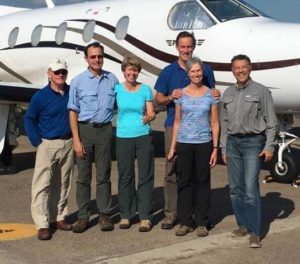
Birding Around the World with one of Maine’s most experienced and enthusiastic birders, Becky Marvil. In the summer of 2015, Becky, her husband Josh (the pilot), and two other couples spent 30 days traveling around the world in a private plane. Their route took them from the US to Newfoundland, the Azores, Turkey, Oman, Sri Lanka, Singapore, Taiwan, Russia, and Alaska.
In addition to sightseeing and learning about different cultures, Becky’s background in biology and ornithology caused her to focus on the birds, photographing and videotaping many species, and learning about their regional family variations AND similarities from one stop to the next. From the volcanic islands of the Azores to the 106-degree heat of Oman to the chilly, drizzly coast of Alaska, she will show her beautiful photos and reveal stories of bird species from around the globe!
Becky Marvil lives with her family in Yarmouth, Maine. She has a background in Biology, Ornithology, and Computer Science and runs her own computer programming/webpage design business. She has been the Executive Director of the Acadia Birding Festival for 8 years, combining her knowledge of webpage design, organizational skills, and love of birding. She is also the Secretary for the Maine Bird Records Committee, a eBird Hotspot monitor for Maine, and just recently became a regional coordinator for the Maine Breeding and Wintering Bird Atlas. During her free time, she helps with local bird surveys, chases after rarities, and loves to travel and enjoy birds in new locations.
The program will be at 7 p.m. in the Mather Auditorium at the Wells Reserve at Laudholm. This interesting, educational program is free and open to the public. Come early for refreshments and social time.

Please click on the link below to view the Spring 2018 issue of our Harlequin newsletter (with photos in full color!)

Great Egret in breeding plumage
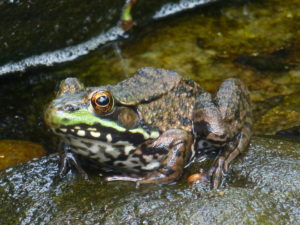
Web Feet and Slimy Skin will be presented by Dr. Kris Hoffmann from the University of Maine, Kris spoke to us in September about turtles. Her return promises a fascinating, informative, and funny program – this time on Maine’s fabulous frogs.
Anatomy meets ecology in this hour-long presentation. Join us as we learn why frogs are slimy, how metamorphosis affects more than their legs, where they go in the winter, how they use their eyes to help swallow, what you can do to help their populations, and more. She will describe the biology of these water-loving animals, introduce us to all the frogs in Maine, and discuss their conservation in a presentation sure to entertain!
The program will be at 7 p.m. in the Mather Auditorium at the Wells Reserve at Laudholm. This interesting, educational program is free and open to the public. Come early for refreshments.

Of Mallards and Men: The Migratory Bird Treaty Act of 1918 by author, birder and UNH History Professor Dr. Kurk Dorsey. This event will help us celebrate the 100th anniversary of passage of the Migratory Bird Treaty Act which is the basis for much of the protection afforded wild birds in the US and other nations, but is currently being weakened. In December, the Interior Department issued a ruling that businesses which accidentally kill non-game migratory birds during their operations are not in violation of the MBTA.
A popular speaker for Seacoast Audubon, Kurk’s expertise in environmental history blended with his underlying sense of humor will educate and entertain as he reveals the surprising story of how the federal government found itself in the business of protecting migratory wildlife. Such colorful characters as President Woodrow Wilson; hunter, taxidermist, zoologist William Hornaday; and naturalist Mabel Osgood Wright played important roles in the drama. This promises to be an excellent program. Come early for refreshments and social time.
Please note: This program is on the fourth Tuesday of March, a week later than our usual schedule.
The program will be at 7 p.m. in the Mather Auditorium at the Wells Reserve at Laudholm. Please join us. York County Audubon programs are free and open to all

The shorebird coordinator will recruit and manage local volunteers who monitor birds on the beach and educate visitors. The coordinator will work with the Town, Maine Audubon, Maine Dept Inland Fisheries and Wildlife and federal agencies to help ensure the success of beach-nesting birds on Goose Rocks Beach. An ideal candidate would be a local person, who can help motivate and create a larger community of shorebird lovers. Dates of employment will be approximately April to September.
Send resume with cover letter to Annica McQuirk
Please click on the link below to view the Winter 2018 issue of our Harlequin newsletter (with photos in full color!)
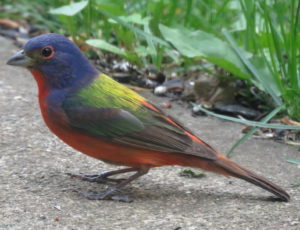
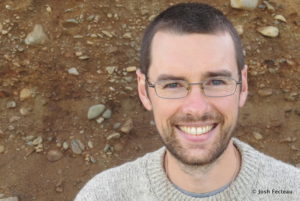
Read the feature interview with new Maine Big Year record holder Josh Fecteau, describing some of his adventures and the birds he found, including this Painted Bunting in Palermo, Maine on May 18th.

The winter landscape is a fabulous time to connect with the lives of our local wildlife. Mammals, birds (even winter insects) leave behind tracks, trails and signs of their presence. Spend the morning with certified wildlife tracker Dan Gardoqui of White Pine Programs, learning to interpret the abundant clues of our wild neighbors.
The workshop will run from 9 till noon on Saturday, January 20th (with Sunday as a fallback date if Saturday’s weather is too poor). It will be held at the Wells Reserve at 342 Laudholm Farm Road in Wells
Participants should be dressed to be outdoors for the entire 3 hours – regardless of temperature. Dress in layers. Bring snacks and a drink. Program runs regardless of snow cover. For adults & interested teens. Group size is limited to 12 people, and advance registration is required. Please register by clicking on the link under “What’s Coming Up” on the right side of this page, then scrolling down to find the registration form.The price is $20/ person ($25/person for non-members), payable by cash or check at the workshop.
Note: this workshop will also be presented on Sunday, February 25th, sponsored by the Wells Reserve. FMI: https://www.wellsreserve.org/event/2-25-18-winter-wildlife-tracking-with-dan-gardoqui

Dan Gardoqui is a co-founder and Executive Director of White Pine Programs, a nature connection nonprofit based in York, Maine. He has been studying naturalist skills, wildlife tracking, bird language, and mentoring for over 25 years. Dan has a M.S. in Natural Resources, is a Certified Wildlife Tracker, Registered Maine Guide, and served as Science Faculty at Granite State College for over a decade. Through wildlife tracking, Dan has contributed to wildlife studies and served as science editor for the bird language book What the Robin Knows. While not navigating the landscape of nonprofit leadership and management, Dan loves spending time trail running, hunting, playing music, and being a dad to his boys.
THIS WORKSHOP HAS BEEN FULLY BOOKED. IF YOU’D LIKE TO BE ADDED TO THE WAITING LIST, PLEASE SEND AN EMAIL TO ycas@yorkcountyaudubon.org WITH “WORKSHOP WAITING LIST” AS THE SUBJECT
This two-part workshop, on Saturday afternoon, Feb 3rd and Sunday morning, Feb 4th, will get you started on unraveling the mysteries of gull identification. Actually, most gulls are not very difficult to tell apart, though adult and juveniles of most species look very different. We’re going to give ourselves confidence with identifying the easier plumage’s of our common species, and then tackle the more challenging intermediate plumage’s and the less-common species.
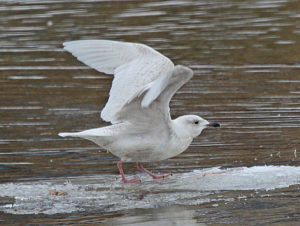
Ring-billed Gull in flight. Photo by Marie Jordan
Part I of the Workshop on Saturday February 3rd will be indoors at the Mather Auditorium of the Wells Reserve at 342 Laudholm Farm Road in Wells will be divided into two sections (you need not be present for both):
1:00 pm-2:30 pm – Beginning Gull Identification. Using Powerpoint and book resources, we’ll start with the basics of gull identification, such as feather topography and aging. We’ll then focus on our most common species: Ring-billed, Herring, Great Black-backed, Laughing, and Bonaparte’s Gulls.
3:00 pm-4:30 pm – Advanced Gull Identification. Now comfortable with the basics, we’ll move on to the uncommon species: Lesser Black-backed, Iceland, Glaucous, and Black-legged Kittiwake. Next up will be the rarities: Little, Black-headed, and yes, even “Thayer’s.” We’ll touch upon “Megas” such as Mew, Slaty-backed, and Sabine’s, and we’ll discuss hybrids. Finally, we’ll apply what we have learned to tackle and understand some identification quandaries, such as the famous “Westbrook Gull” before we finish up with some photo quizzes to test our new-found knowledge.
Part II: Sunday, February 4th (8:00am – 12:00pm):
We’ll meet in Portland (Back Cove parking lot on Preble Street Ext, opposite the Hannaford’s) to carpool around the area to apply what we have learned. We’ll spend some time with our most common species: Herring, Ring-billed, and Great Black-backed, and then seek out Iceland and Glaucous, and perhaps we’ll find something even better!
We hope that you will join Derek for this workshop to foster appreciation for this fascinating group of birds. Derek (with his wife Jeannette) owns and operates Wild Bird Supply in Freeport. He’s the author of “How to Be a Better Birder” and is well respected as one of the premiere birders in Maine and beyond.
York County Audubon is sponsoring this Workshop. We are asking for a $10.00 fee to participate, payable by cash or check at the Saturday session. Space is limited, and advance registration (via this website) is required.
Please register by clicking on the link under “What’s Coming Up” on the right side of this page, then scrolling down to find the registration form. Weather dates or Workshop updates will be posted on the York County Audubon website and Derek’s Web Page (freeportwildbirdsupply.com/birdingtoursinMaine.asp).
Join artist, musician, and photographer Deborah Gordon as she reveals secrets and hidden natural wonders of Newfoundland and Labrador. Learn about the less frequented outposts, national and provincial parks, World Heritage Sites, and the infectious humor and uplifting spirit that comprises the culture and people of Canada’s most eastern province.
Newfoundland and Labrador are surprisingly accessible, and you will learn the options and necessary preparations for travel and accommodations, seasonal activities, literature and history resources as Deborah is excited to share her expertise on this region. Her captivating, in-depth slide show of the wildlife, landscape, architecture, and mystery of this dauntingly exquisite, un-pretentious place will interest all.
Deborah Gordon spends her summers on the Great Northern Peninsula, where she immerses herself in the color, light, and space that is quintessentially Newfoundland. Deborah loves capturing on camera all that leaves her breathless.
The program will be at 7 p.m. in the Mather Auditorium at the Wells Reserve at Laudholm. Please join us. York County Audubon programs are free and open to all
FMI: http://www.deborahgordondesign.com/

A video of our September program on turtles, presented by Kris Hoffman, is now available and can be watched by clicking on the link below.
Our special thanks to Saco River Community Television for recording and editing the program, and making this video available.

Beginning on Christmas Day in 1900, the Audubon Society has been sponsoring Christmas Bird Counts (CBC’s) to help monitor the health and status of bird populations throughout North America. In that first year, there were 25 count circles with a total of 27 birders. Now, there are over 2300 count circles each year with over 70,000 birders participating, with the locations stretching from Alaska to South America.
Each year, York County Audubon sponsors two counts. The Southern York County circle extends from Kittery to Ogunquit, while the Biddeford/Kennebunkport count circle reaches from Kennebunk to Saco. Each count territory is a geographic circle, carved out into six or more territories. Each territory has a team that scours it during “count day” looking for all bird species, and recording the numbers seen of each. It can, at times, be a bit more art than science, as we attempt to count – but not double count – the birds we find. We also have supporters who monitor their home feeders during the day and contribute their totals. To avoid double counting, we ask them only to report the greatest number of each species that they see at any one time during the day.
At the end of the day (at 5 p.m.), we meet to compile the counts and share highlights. Once compiled, the counts are forwarded to National Audubon for their master compilation. Both locally and nationally, the totals are reviewed to assess trends in the populations of all species. While the totals can vary fairly dramatically year to year due to the weather that happens to grace us on count day, the bigger picture over time can be very informative.
This year, the Southern York County CBC will be held on Monday, December 18th, 2017, while the Biddeford/Kennebunkport CBC will be on Saturday, December 30th. The Southern YC compilation will be held in the Mather Auditorium at the Wells Reserve, while the Bidd/Kport compilation will held at the Church on the Cape in Cape Porpoise. If you might like to find out about participating in one or both, please contact Monica Grabin at 207-985-3342 or grabin@roadrunner.com for the Southern York County CBC, or Kathy Donahue at 207-967-4102 or kadona11@roadrunner.com for the Biddeford/Kennebunkport CBC.
Keep your feathered friends happy this winter by treating them to tasty and fresh, premium quality bird food and help support two of your favorite environmental organizations at the same time. Profits from our annual sale support the educational programs of both York County Audubon and the Wells National Estuarine Research Reserve. A wide variety of types of seed and suet is available, with great pricing, especially if you order early.
Early bird pricing is available if you place your order by 4 p.m. on October 27th.
Order pick up will be at the Wells Reserve November 9th – 11th, with easy access and volunteers on hand to help load your car.
For more information, please access the order form via this link: